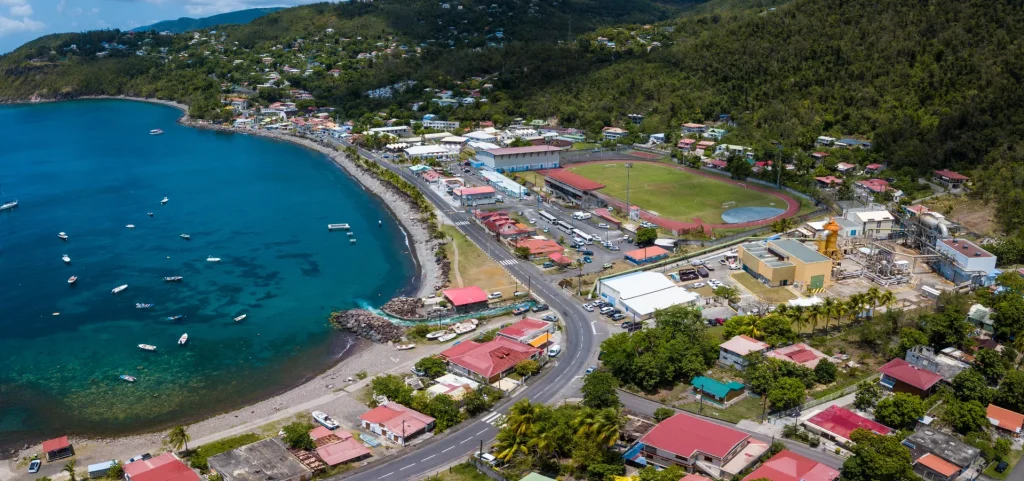
Bouillante is one of the oldest municipalities in Guadeloupe. Stretching along 15 kilometers of coastline, it attracts many visitors each year, particularly those interested in scuba diving and natural hot springs. The town takes its name from the many hot water sources that rise from beneath the sea. Today, Bouillante is home to a geothermal power plant that accounts for about 9% of Guadeloupe’s electricity production. The area is also known for its very good restaurants.
Bouillante at a glance
A name that says it all: volcanic heritage
You might think the name is just anecdotal, but it comes directly from the local hot springs. On the leeward coast of Basse-Terre, it sounds like a genuine promise. This is a land that lives, breathes, and generates heat.
That warmth comes from the intense volcanic activity of the island’s mountain range. This restless geology, dominated by La Soufrière volcano, shapes the entire area. The ground itself tells a powerful story.
This volcanic heritage explains everything you see here. It is the key to understanding Bouillante’s unique attractions.
The geothermal power plant, Bouillante’s beating heart
The Bouillante geothermal power plant is not an ordinary facility; it is an industrial exception. Unique in the Caribbean, it provides clean electricity that is essential for Guadeloupe. It is a local technological achievement that often goes unnoticed.
Here is how it works: boiling water is drawn from deep underground, and the steam drives the turbines. It is the only power plant of this kind in France, making smart use of the earth’s natural heat to supply daily electricity.
Once cooled, the water released back into the sea creates pleasantly warm bathing areas. It is an unexpected side effect that local swimmers particularly enjoy.
Between the Caribbean Sea and the foothills of the national park
Bouillante sits between the calm waters of the Caribbean Sea and lush green mountains. The geography here makes no compromises; it sets its own pace. The contrast is striking and humbling.
It is an ideal gateway to Guadeloupe National Park. Dense tropical forest begins just behind the coastline, with no gradual transition. In a matter of moments, you move from deep blue to intense green.
This dual identity of sea and mountains is its greatest strength. It is what makes the destination so complete.
Diving and marine life: discovering the Cousteau Reserve
The Pigeon Islets, a life-size aquarium
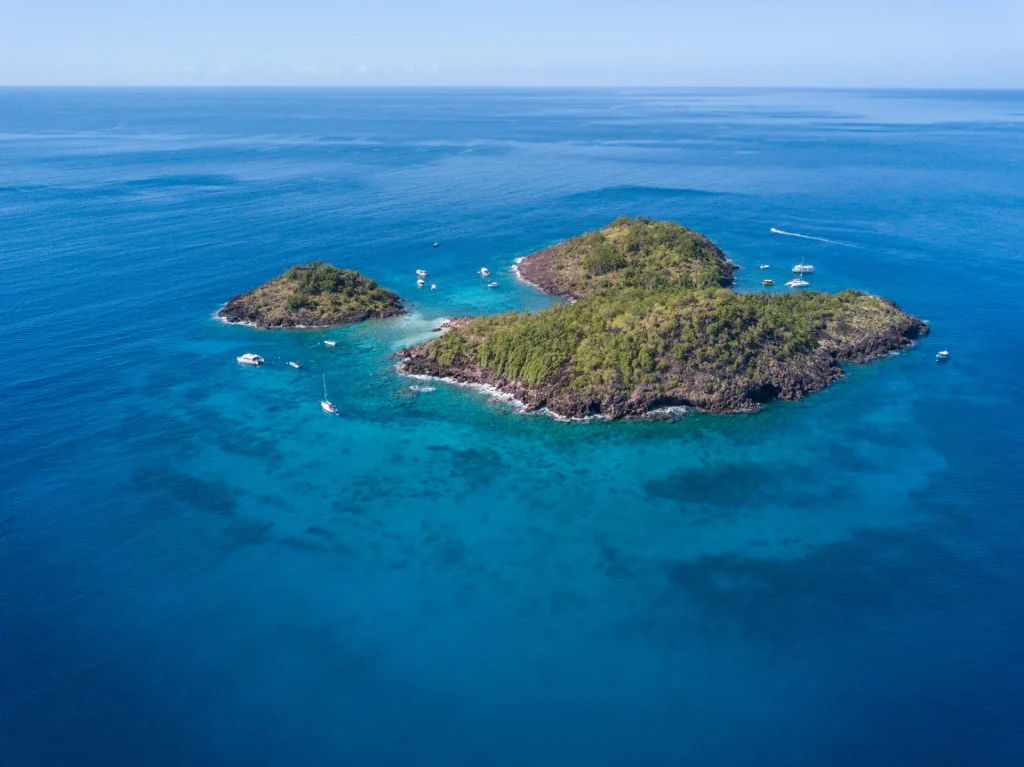
Honestly, coming here without exploring the Cousteau Reserve would be a major mistake. This natural gem, the true heart of the national park, surrounds the famous Pigeon Islets. The site owes its name to Commander Cousteau himself, who strongly advocated for its official protection.
You do not need to be an expert to enjoy it: snorkeling alone is enough to be amazed. That said, scuba diving allows access to much deeper, hidden treasures.
As a fun detail, a bust of Jacques Cousteau awaits underwater, resting 12 meters below the surface.
Marine life and underwater landscapes: what to expect
The diversity beneath the surface is so rich that it can feel overwhelming. Here is what you are likely to encounter:
- Sea turtles: Often seen calmly grazing on seagrass near Malendure Beach.
- Colorful tropical fish: A constant ballet of parrotfish, sergeant majors, grunts, and blue tangs.
- Coral gardens: The seabed is literally carpeted with pillar corals, gorgonians, and sponges, forming a vital ecosystem.
- Rarer encounters: With some luck, you may spot barracudas, lobsters, or even dolphins farther offshore.
Practical tips for your diving or snorkeling session
Do not try to be a solo hero. I strongly recommend going through one of the certified dive centers on Malendure Beach for a guided and safe outing.
My pro tip: always choose a morning session. Visibility is much better, and you will avoid the afternoon crowds. If not, glass-bottom kayaks are an excellent alternative.
Remember the golden rule: look with your eyes only. Do not touch corals or marine life, in order to protect the ecosystem.
The ultimate guide to hot springs and beaches in Bouillante
In Bouillante, water is not only experienced below the surface. Above ground, the experiences are just as memorable, and often much warmer.
Natural hot springs: where to relax
Wondering why the water is steaming? The explanation is simple: cracks in the earth’s crust allow seawater to seep in. It heats up on contact with the magma beneath La Soufrière, then rises back to the surface charged with energy. This raw, natural geothermal process powers the entire area.
To try it for yourself, head to Bain du Curé at Anse à Sable, an easy-to-access cement pool right by the sea. If you prefer something more natural, Source Thomas offers a tiny rocky basin where the temperature rises quickly. Be careful, it can be very hot—always test the water before getting in.
Black sand or white sand? Beaches not to miss
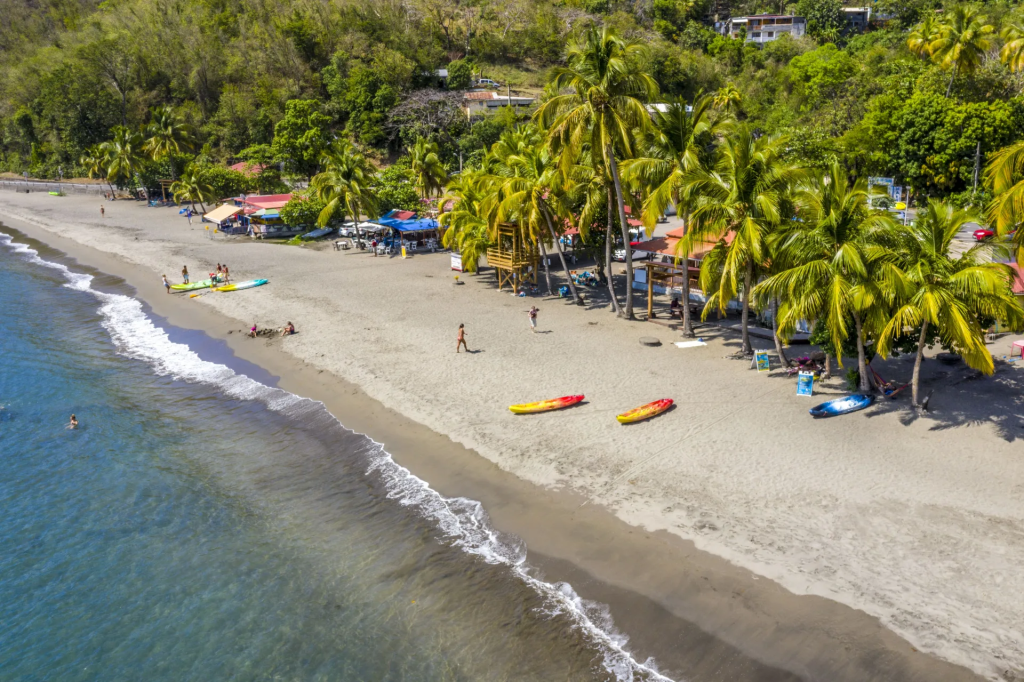
It is impossible to skip the must-see Malendure Beach. Its volcanic black sand can get hot underfoot, but the atmosphere is truly unique. This is the main base for trips to the Pigeon Islets and the Cousteau Reserve, where marine life thrives just below the surface.
Farther south, Petite Anse Beach offers a different vibe. The sand is lighter, and the setting feels more family-oriented. Its very calm waters are reassuring for parents and perfect for relaxation.
If you are looking to avoid crowds, there are also smaller, discreet coves along the coast where you can enjoy near-total solitude, far from tourist activity.
Find your ideal swimming spot
Do not feel like reading long explanations? Here is a clear summary. This table helps you choose the perfect swimming spot at a glance, based on your preferences and tolerance for crowds.
| Swimming spot | Type | Ideal for… | Key features |
|---|---|---|---|
| Malendure Beach | Beach (black sand) | Diving, lively atmosphere | Watersports center facing the Cousteau Reserve, restaurants, parking. |
| Petite Anse Beach | Beach (light sand) | Families, tranquility | Shallow and calm waters, local feel, less crowded. |
| Bain du Curé | Hot spring | Easy-access relaxation | Cement pool by the sea, free, popular in the late afternoon. |
| Source Thomas | Hot spring | Authentic experience | Small natural basin, very hot water (test before entering), more intimate. |
| Pigeon Islets | Snorkeling / diving | Underwater exploration | Access by boat or kayak, maximum biodiversity, protected site. |
Beyond the water: hiking and lush nature
If you manage to pull yourself away from the water, you will find that Bouillante has much more to offer on land, with nature everywhere, just waiting to be explored. This is where Basse-Terre reveals its true wild character.
Trails of Guadeloupe National Park
Bouillante sits directly against Guadeloupe National Park, a geographic reality that changes everything. A dense, humid tropical forest covers these steep slopes, creating a powerful natural setting far removed from classic seaside postcard imagery.
I suggest trying an accessible hiking trail that climbs toward a local river or waterfall. The thermal contrast between the intense heat of the coast and the sudden coolness of the forest is striking. It is a raw, sensory experience that leaves a lasting impression.
Parc des Mamelles: an immersion in the tropical forest
Parc des Mamelles is an ideal complementary visit, located nearby along the iconic Route de la Traversée. It is an easy stop to fit into your itinerary without adding long drives.
The main highlight is the series of suspended walkways rising about 20 meters above the ground, offering a canopy-level view of the forest. From there, you can observe many Caribbean endemic species, often invisible from the forest floor, in their natural habitat.
It is one of the must-do activities if you are wondering what to do in Guadeloupe, especially with family.
Other hidden gems to explore in the highlands
- La Maison du Cacao: A delicious and informative stop dedicated to the history of cacao in Guadeloupe, from the cocoa pod to the finished chocolate bar.
- Habitation La Grivelière: Discover the island’s coffee-growing past by visiting this historic plantation, set in the heart of a lush, green valley.
- Canyoning: For thrill seekers, the many rivers cascading down the slopes create unforgettable canyoning routes, all guided and supervised by professionals.
Planning your stay in Bouillante: practical tips and local advice
How to get to Bouillante and get around
Let’s be honest: renting a car is essential if you want to explore Bouillante and tackle its steep hills. Without your own vehicle, you will miss much of what the area has to offer. From Pointe-à-Pitre Airport, allow about 45 minutes to one hour by car.
Once there, getting around is straightforward, as the town is crossed by National Road N2. This main route loops around Basse-Terre, making travel simple and efficient.
Above all, do not make the mistake of relying on local buses (karulis) for sightseeing. Their irregular schedules and fixed routes are not suited to exploring the island.
Where to stay: our accommodation recommendations
- Gîtes and vacation rentals: This is the top choice in Bouillante. You will find plenty of villas and bungalows, often with stunning views over the Caribbean Sea.
- Boutique hotels: A few small-scale properties offer more services, ideal if you are looking for comfort and a bit of pampering.
- Ecolodges: For a more nature-focused experience, some lodges are set in the hills, surrounded by lush vegetation.
Our tip: Whatever your choice, book well in advance, especially if you plan to visit between December and May.
Safety and the best time to visit
For the best sunshine, aim for the dry season, which runs from December to May. The wet season (June to November) is generally cheaper, but you should expect short yet intense tropical downpours.
When it comes to safety, stay cautious. Always test the temperature of hot springs before getting in. Likewise, listen carefully to dive instructors’ briefings to avoid underwater accidents.
Bouillante is a quiet town, but basic vigilance is still advised. For a broader perspective, you can consult our guide listing neighborhoods to avoid in Guadeloupe.
Honestly, Bouillante is much more than just a stop on the map—it is a true favorite. Between swimming with turtles, natural hot springs, and jungle right next door, it never gets old. If you want to experience an authentic, vibrant side of Guadeloupe, go for it without hesitation.
FAQ
Where exactly is Bouillante located?
Bouillante is on the Leeward Coast, on the west side of Basse-Terre Island. It is the perfect spot where volcanic mountains drop straight into the Caribbean Sea. If you drive around the island on National Road N2, you simply cannot miss it.
Why is the water so warm here?
That is part of what makes the place special. The town’s name is no coincidence: volcanic activity from La Soufrière heats the water deep underground. It then rises through natural fissures, creating the famous hot springs, such as Bain du Curé, and even supplying the local geothermal power plant.
Where are the best swimming spots in Bouillante?
You are spoiled for choice. For snorkeling and a lively atmosphere, head to Malendure Beach with its black sand. If you are looking for something calmer and more family-friendly, Petite Anse is a great option. And for a truly unique experience, go to Source Thomas to soak in naturally hot seawater right by the shore.
What is the most beautiful beach in the area?
Without hesitation, Malendure Beach is the local star, with its volcanic black sand and stunning views of the Pigeon Islets. It may not fit the classic white-sand postcard image, but its charm, sunsets, and underwater scenery make it the must-see beach in the area.
Where can you find the most beautiful beach in all of Guadeloupe?
That is the big question. While Malendure wins for diving, many travelers agree that Grande Anse Beach in Deshaies, just north of Bouillante, or La Caravelle Beach in Sainte-Anne are true gems. It all depends on whether you prefer wild golden sand or a turquoise lagoon.
Is it safe to drink tap water?
In theory, yes, tap water is potable. However, due to heat and sometimes unreliable networks, including occasional outages or a noticeable chlorine taste, it is generally safer to drink bottled water to avoid any minor stomach issues that could disrupt your trip.
Where should you avoid swimming in Guadeloupe?
In general, avoid unsupervised beaches on the east (Atlantic) coast, where strong currents and rough seas can be dangerous. In Bouillante, the Caribbean Sea is much calmer, but you should still watch out for sea urchins and never touch coral.
Are there areas to avoid on the island?
Guadeloupe is welcoming, but like anywhere else, common sense applies. Avoid walking alone at night in certain outer neighborhoods of Pointe-à-Pitre or Les Abymes. In Bouillante, the atmosphere is genuinely relaxed and peaceful, and there is very little to worry about in terms of personal safety.