Guadeloupe is warm every single day of the year. At the airport station near Pointe-à-Pitre, Météo-France’s long-term averages give daytime highs between 29.2 °C (85 °F) in January and 31.9 °C (89 °F) in August, and the sea stays between 26 and 29 °C (79 to 84 °F) all year. Temperature is the variable you can ignore. Rain, humidity and the hurricane months are the ones that change a trip.
I live here, and the question friends ask me is never “will it be hot?” but “will it rain on my week?”. The honest answer depends on two things: the month, and which side of the island you sleep on. If you are still picking dates, read our best time to visit Guadeloupe guide first; this page is about what the sky actually does.
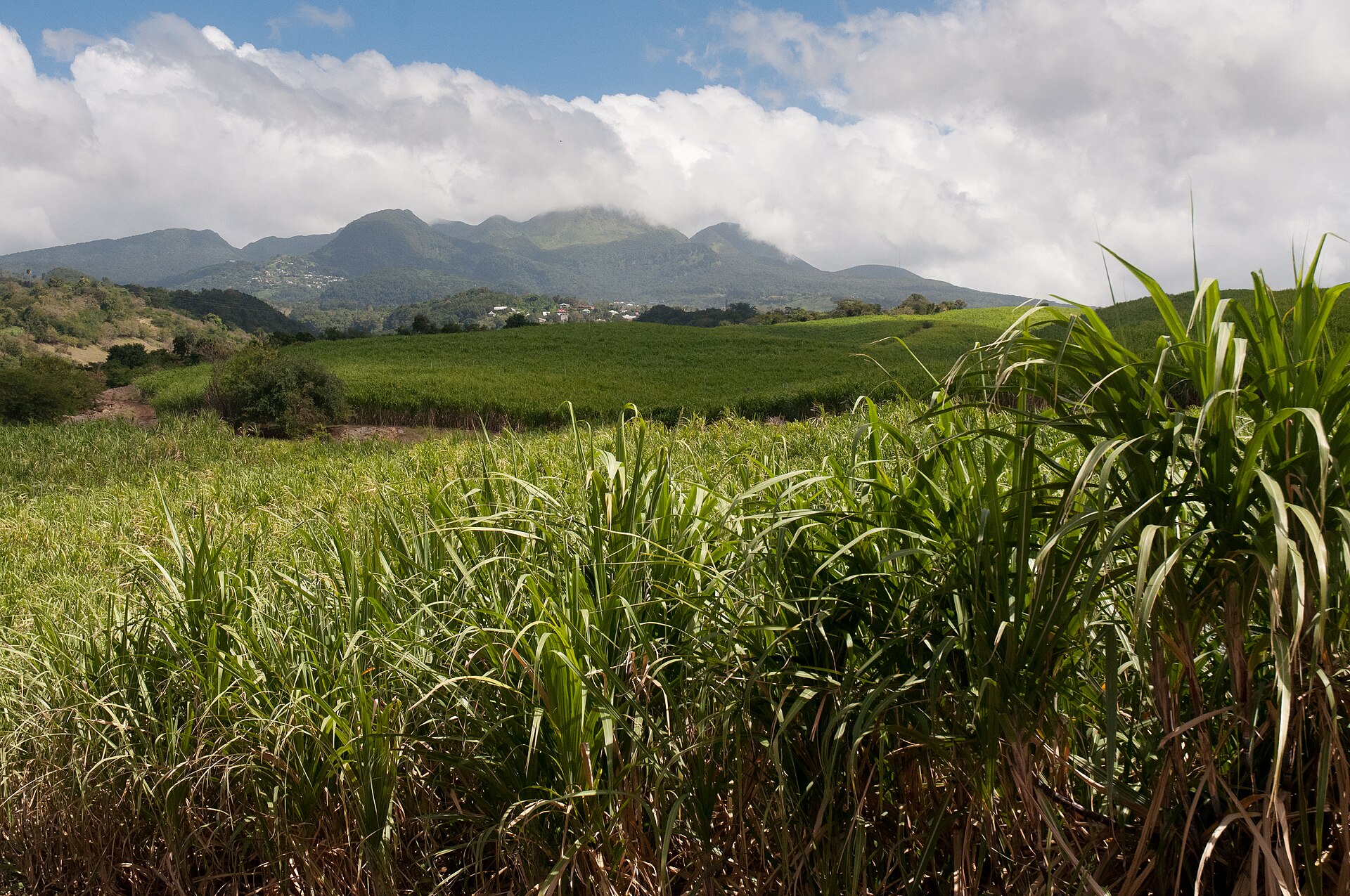
Two seasons, and two in-between months
Locals do not talk about summer and winter. They talk about carême, the dry season, and hivernage, the wet season. Météo-France places the carême from January to April and the hivernage from June to November, with May and December as transition months that can lean either way.
- Carême (January to April): sunny days, steady trade winds from the east, the occasional short evening shower. Nights drop to 19 to 23 °C (66 to 73 °F), which feels cool after a day in the sun.
- Hivernage (June to November): hotter, heavier air, highs of 31 to 33 °C (88 to 91 °F), nights rarely under 22 °C (72 °F), more frequent rain, and the Atlantic hurricane season.
The gap between the two is smaller than the names suggest. A “dry” January still averages close to 16 days with some rain at the airport, and a “wet” October still gets more than 180 hours of sunshine. What changes is how long the showers last and how sticky the air feels at night. The deeper mechanics, trade winds and all, are in our guide to Guadeloupe climate.
Guadeloupe weather month by month
These are Météo-France normals for Le Raizet, the station next to Pointe-à-Pitre airport on the Grande-Terre side. Use them as a ruler: they describe the dry, flat half of the island, so Basse-Terre gets more rain than this.
| Month | High / low | Rain | Days with rain |
|---|---|---|---|
| January | 29.2 / 20.7 °C | 83 mm | 16 |
| February | 29.2 / 20.6 °C | 60 mm | 12 |
| March | 29.7 / 21.0 °C | 68 mm | 11 |
| April | 30.3 / 22.2 °C | 97 mm | 11 |
| May | 30.9 / 23.6 °C | 134 mm | 13 |
| June | 31.4 / 24.3 °C | 108 mm | 13 |
| July | 31.6 / 24.3 °C | 130 mm | 15 |
| August | 31.9 / 24.1 °C | 169 mm | 16 |
| September | 31.7 / 23.8 °C | 206 mm | 16 |
| October | 31.3 / 23.3 °C | 215 mm | 18 |
| November | 30.5 / 22.4 °C | 214 mm | 17 |
| December | 29.7 / 21.3 °C | 134 mm | 17 |
Source: Météo-France normals, Le Raizet and Pôle Caraïbes airport stations
Three things jump out. February and March are the driest months, with about a quarter of October’s rain. The year totals around 1,617 mm (64 in) at the airport, and close to 40% of it falls in September, October and November alone. And a “day with rain” here usually means one shower, not a grey day: August, which has 16 of them, is also one of the sunniest months of the year at about 220 hours. For the detail of each month, with sea conditions and what it means for beaches and hikes, discover Guadeloupe weather by month.
How hot it really feels
The thermometer barely moves: the spread between the coolest and the hottest month is under 3 °C. The record at the airport since 1950 is 34.2 °C (94 °F) at the top and 13 °C (55 °F) at the bottom, which tells you how narrow the range is.
What you feel is the humidity and the wind. In February the trade winds blow almost every day and 30 °C is pleasant in the shade. In September, with the wind dropping and the air saturated, the same 31 °C has you changing shirts at lunch. The sun is the other surprise for visitors from the north: at this latitude the UV is strong even under a thin cloud layer, and I see sunburnt arms on the Les Saintes ferry every week. Night and sea temperatures, altitude and the cooler rainforest are covered in Guadeloupe average temperature.
Basse-Terre gets the rain, Grande-Terre the sun
This is the variable most forecasts hide. Guadeloupe’s two main islands sit side by side but have opposite weather. Grande-Terre, the eastern wing with Sainte-Anne, Saint-François and Le Gosier, is low limestone: clouds pass over without stopping. Basse-Terre, the western wing, rises to 1,467 m at La Soufrière, and the trade winds push moist air up its slopes all year.
The result: on a typical February afternoon you can be on a dry beach in Sainte-Anne and see a dark cap of cloud sitting over the volcano on the horizon. The summit is hidden far more often than it is clear, which is why hikers start at dawn. Deshaies and the leeward coast, sheltered behind the mountains, sit in between: greener than Grande-Terre, sunnier than the rainforest around the Carbet Falls.
Flo’s advice
When rain is forecast “for Guadeloupe”, drive away from it. If it pours in Basse-Terre in the morning, I head to the Grande-Terre beaches and come back for the waterfalls once the clouds lift, usually by mid-afternoon. The island is small enough that the dry side is rarely more than an hour away.
Rain, hurricanes and sargassum
The wet half of the year carries three distinct risks, and they do not peak at the same time. Knowing which is which keeps you from cancelling a good trip or booking a bad one.
Showers and heavy rain days
Most tropical rain here comes as a burst of 10 to 30 minutes, then sun and steam. The days that spoil plans are the ones when a tropical wave crosses the Antilles and it rains on and off from morning to night. Those come mainly between August and November. My rainy season Guadeloupe page explains how to plan around them, and the October numbers above are why Guadeloupe in October is the dampest month of the year.
Hurricanes and tropical storms
The Atlantic hurricane season officially runs from 1 June to 30 November, with the highest risk from mid-August to mid-October. A direct hit on Guadeloupe is rare in any given year, but a storm passing nearby can still close beaches, cancel ferries and flights for a day or two. Météo-France publishes a colour-coded vigilance map on meteofrance.gp, and that is the one locals follow, not the phone app. Travel insurance and the dates to avoid are on the hurricane season Guadeloupe page.
Sargassum seaweed
Sargassum is not weather, but it is the reason a sunny beach can be unusable. The brown seaweed drifts in from the Atlantic mostly between spring and early autumn, and 2026 has been a heavy year: Météo-France bulletins rated the risk “very high” on most islands in late May and “high” on the east coast and Marie-Galante in July. It hits the Atlantic-facing shores; the leeward coast of Basse-Terre, around Deshaies and Bouillante, is spared most of the time.
What to pack for the weather
Packing for Guadeloupe is the same in every month, with one or two swaps for the hivernage. This is what I tell visiting friends.
- A light rain jacket or a packable poncho, all year: you will need it for La Soufrière and the rainforest trails even in March.
- One long-sleeved layer for the summit, where it is windy and wet, and for air-conditioned restaurants.
- High-SPF reef-safe sunscreen, a hat and sunglasses, even on cloudy days.
- Shoes that can get muddy, for waterfalls. Flip-flops are fine everywhere else.
- Mosquito repellent from June to December, when the rain brings them out at dusk.
The end of the year is a good example of how the seasons overlap. Late November still has hivernage rain, but the crowds have not arrived yet: Guadeloupe in November is the month I suggest to people who can live with a shower a day in exchange for quiet beaches.
Keep reading
December is when the trade winds come back and the air dries out, though early December can still bring a few wet days. The holiday crowds arrive in the second half of the month, and the details are on Guadeloupe in December.
Guadeloupe weather: the questions I get
What is the best month for weather in Guadeloupe?
February and March. They are the driest months at the airport (60 and 68 mm of rain on average), the trade winds keep the heat comfortable, and the hurricane season is months away. April is a close third with slightly warmer nights.
Does it rain every day in the rainy season?
Not all day. From August to November it rains on about 16 to 18 days a month at the airport, but most of those are short showers between long sunny spells. The exceptions are tropical waves and storms, which can bring a full day or two of rain.
Is Guadeloupe ever cold?
No, at sea level. The coldest temperature recorded at the airport since 1950 is 13 °C (55 °F). January and February nights around 20 °C (68 °F) feel fresh with the wind, and the summit of La Soufrière, at 1,467 m, is the only place where you will want a real layer.
How warm is the sea in Guadeloupe?
Between 26 and 29 °C (79 to 84 °F) all year, according to Météo-France. You can swim without a wetsuit in every month of the year.
Which forecast should I trust?
Météo-France’s own site for the Antilles, meteofrance.gp, and its vigilance map for storms. Generic phone apps often show a rain icon for the whole island when only Basse-Terre gets wet, so read the hourly detail and look at the radar before you cancel a beach day.
The tip that changes everything
A car is your best weather insurance. When one side of the island is wet, the other is usually dry an hour away.
There is no bus that lets you chase the sun from Basse-Terre to Grande-Terre. Pick up at the airport, which sits right between the two, and book before you land: counters sell out in the dry season.
Europcar · affiliate link · same price for you
Some links on this page are affiliate links. You pay the same price. It's how the site stays free of pop-ups and sponsored rankings.