There are five forts worth a stop in Guadeloupe: Fort Delgrès in Basse-Terre for the story, Fort Napoléon in Les Saintes for the view, Fort Fleur d’Épée in Le Gosier for a free hour near the hotels, and the ruins of Fort Joséphine and Fort l’Olive for the quiet. Only Fort Delgrès and Fort Fleur d’Épée run all day; Fort Napoléon closes at 12:30 p.m., and Fort Joséphine is reached by boat.
The forts are powerful symbols of the island’s turbulent past, part of our wider everything you need to know about things to do in Guadeloupe. Since Christopher Columbus landed in 1493, Guadeloupe has been a battleground between European powers, mainly France and Britain, who both wanted this strategic Caribbean territory.
From the 17th century on, a series of military forts went up across the island to defend it from invasion and to protect the sugar trade. Today a visit is a way to read that history on the ground, along with some of the best viewpoints on the island. Hours below were checked in October 2026.
Flo’s verdict in one line
One fort only: Fort Delgrès for the 1802 story, or Fort Napoléon if you are on Les Saintes. Fleur d’Épée is the free, easy one.
Which Fort to Visit? Hours and Entry Compared
Each fort has its own page. This table is the short version, with the days that catch people out: Monday closures, Les Saintes in the morning only, and a boat to reach Fort Joséphine.
| Fort | Where | Hours | Entry |
|---|---|---|---|
| Fort Delgrès | Basse-Terre | Tue to Fri 9:00 to 4:30, Sat and Sun 9:30 to 4:30, closed Monday | Grounds free |
| Fort Napoléon | Terre-de-Haut, Les Saintes | Every day 9:00 to 12:30, last entry noon | About €5 to €7 |
| Fort Fleur d’Épée | Le Gosier | Tue to Sun 9:00 to 5:00, Monday from 10:00 | Free |
| Fort Joséphine | Îlet à Cabrit, Les Saintes | No set hours found; boat access | No ticket found |
| Fort l’Olive | Vieux-Fort, south of Basse-Terre | Open ruins by the lighthouse | No price found |
Flo’s advice
Do not try all five in one trip. Pick one on the mainland and one in Les Saintes if you are going. Fort Delgrès and Fort Fleur d’Épée fit around other plans, but Fort Napoléon is a morning on its own once you add the ferry. If you can only go on a Monday, it is Fort Fleur d’Épée (from 10 a.m.) or Fort Napoléon.
Fort Louis Delgrès in Basse-Terre
Fort Delgrès is the best place on the island to understand the resistance against the return of slavery. Everything on hours, tickets and history is on its own page.
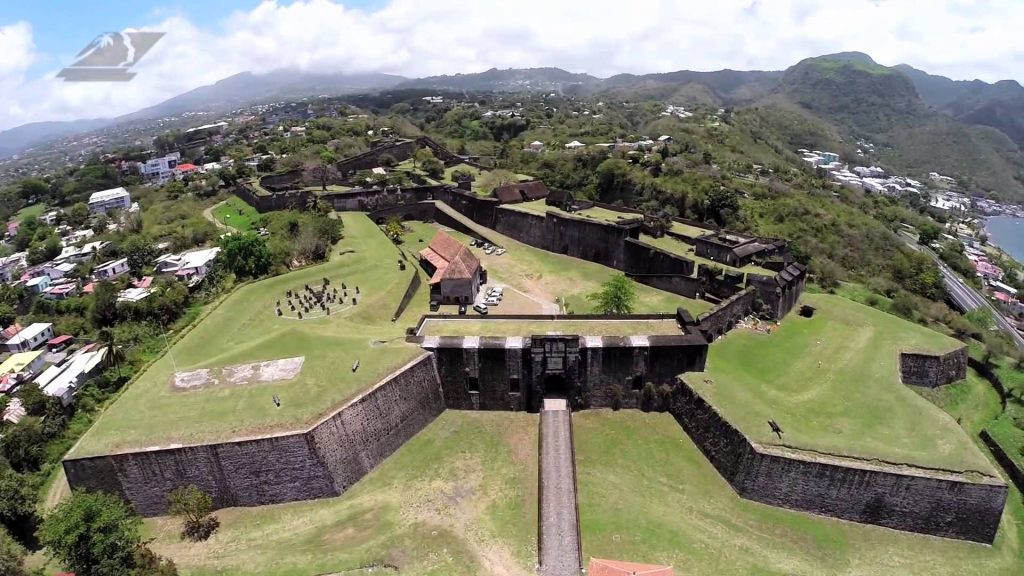
A Symbol of Resistance and Freedom
Fort Louis Delgrès, in Basse-Terre, is one of the most iconic forts in Guadeloupe. It was built in 1650 under the name Fort Saint-Charles to defend the island from British attacks. It is best known for its role in the early 19th century, when it became the stronghold of Louis Delgrès, the Guadeloupean officer who led the resistance against Napoleon’s attempt to reinstate slavery.
Today the fort is a listed historic monument and a symbol of freedom. Two permanent exhibitions, one on Delgrès and the 1802 war and one on the 1976 eruption of La Soufrière, sit inside it, and on clear days the ramparts give a view of the volcano, the sea and the green hills of Basse-Terre.
- 🕒 Tuesday to Friday 9 a.m. to 4:30 p.m., Saturday and Sunday from 9:30 a.m., closed Monday
- 📞 +590 590 99 79 30
- 📍 Le Carmel, 97100 Basse-Terre
Tips for Visiting Fort Delgrès
Follow the walking route along the panels, and look out for the observation points over the city and the sea. At lunchtime, the Rivière-Sens marina in Gourbeyre has restaurants with a view of the boats, including Del Medio.
Fort Napoléon in Les Saintes
Fort Napoléon is the one for the view. It sits above the village of Terre-de-Haut and its museum is open in the morning only.
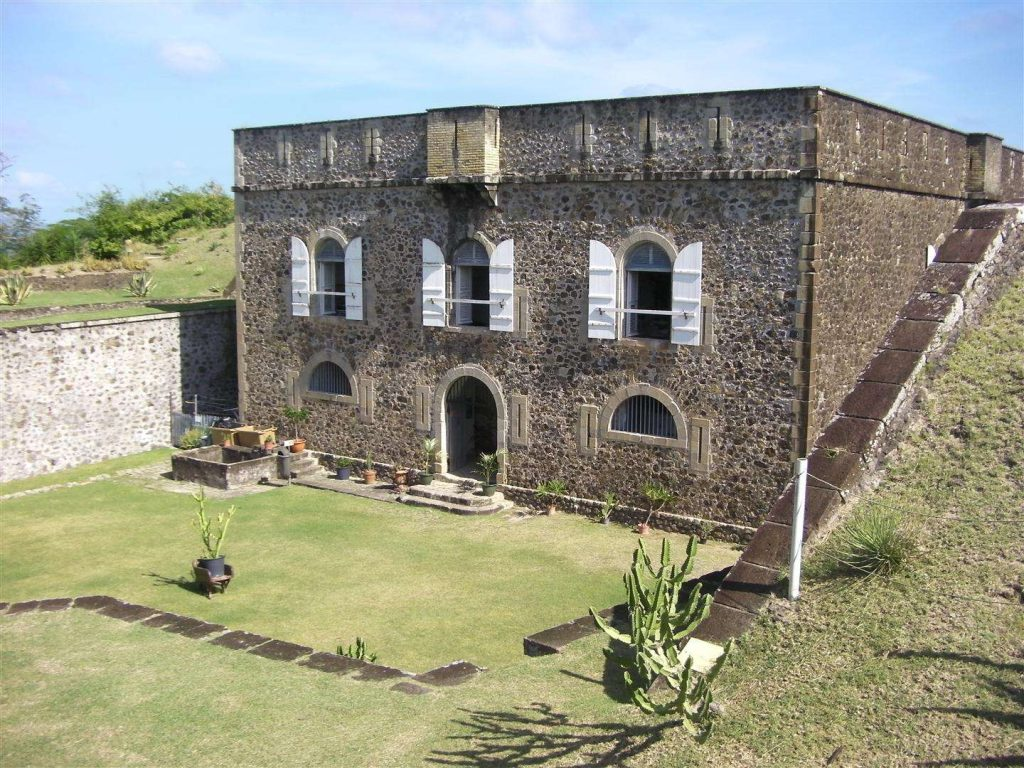
A Panoramic Fortress Overlooking the Caribbean
Perched high above Terre-de-Haut, Fort Napoléon is one of the most remarkable forts in Guadeloupe. The first fort on the hill was destroyed by the British in 1809, and the present bastioned fortress was built between 1844 and 1867, with dry moats, artillery platforms and a central courtyard.
Today Fort Napoléon houses a museum on the history of Les Saintes, with exhibits on local heritage, naval history and island life. From the top you see the turquoise bay, the archipelago and, when it is clear, the island of Dominica on the horizon.
- 🕒 Every day 9 a.m. to 12:30 p.m., last entry at noon
- 📍 Terre-de-Haut, Les Saintes, 97137
- 💶 About €5 to €7 for an adult
Tips for Visiting Fort Napoléon
Bring a camera, since the 360-degree views from the top are the point. The climb from the village takes 15 to 20 minutes. For lunch, choose one of the restaurants near the ferry pier and try grilled seafood, then finish with the island pastry, the “Tourment d’Amour”, before you take the boat back.
Fort Joséphine in Les Saintes
Fort Joséphine is a ruin on a small islet, so the trip is as much a boat outing as a fort visit.
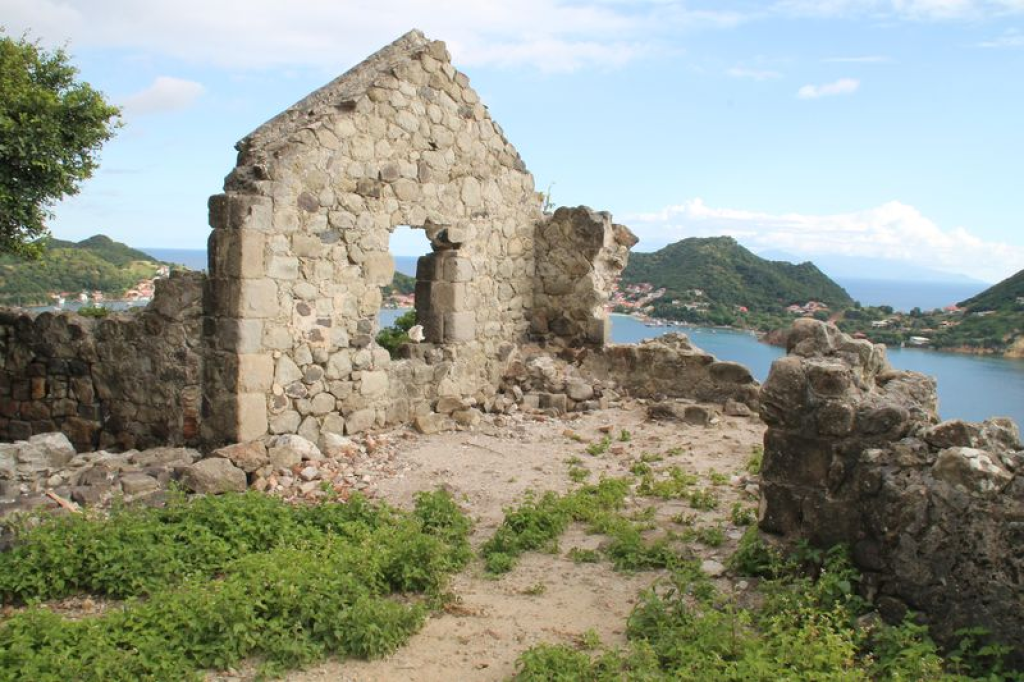
Fort Joséphine stands on Îlet à Cabrit in the Les Saintes archipelago and was built to strengthen the maritime defenses of Guadeloupe against possible British invasions. It stands mostly in ruins today, with walls, casemates and a cistern, and it never saw a major battle. You reach the islet by boat or kayak from Terre-de-Haut in about 10 to 15 minutes, then climb a path to the fort.
The islet is a protected site, so stay on the marked trails. Wear good shoes, bring water and sun protection, and keep your trash with you. A local operator will know the authorized landing places. I found no ticket price or fixed opening hours, so ask the boat operator.
Fort Fleur d’Épée in Le Gosier
Fort Fleur d’Épée is the free one, and the easiest to fit into a beach holiday on the south coast of Grande-Terre.
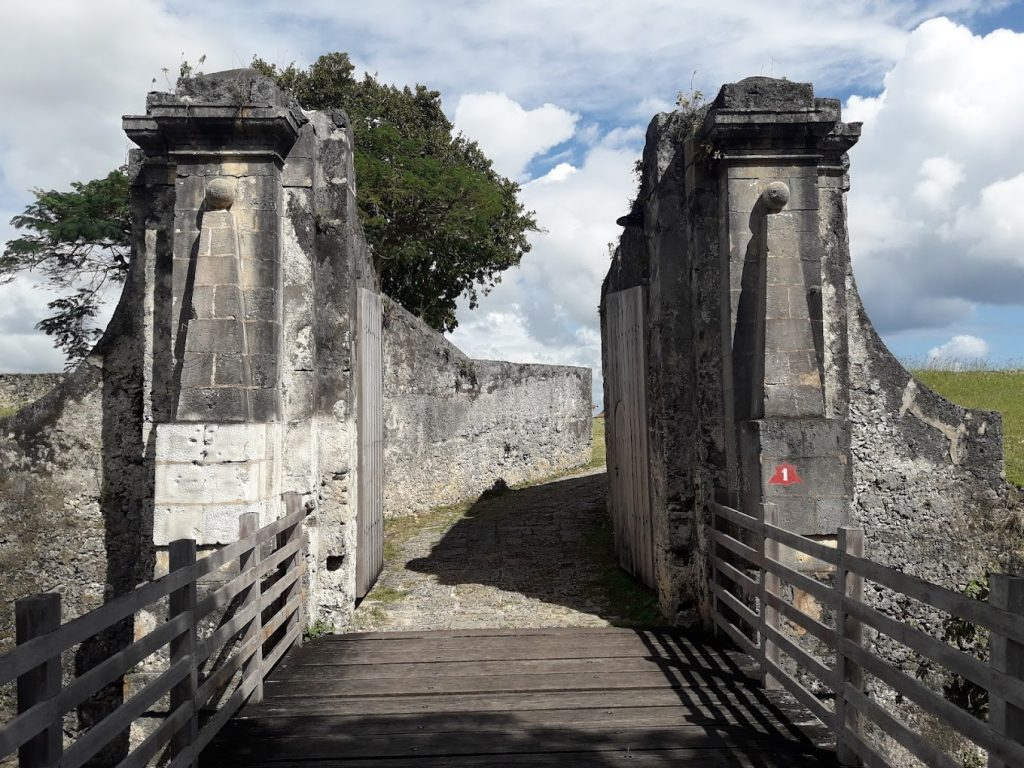
A Historic Stronghold Overlooking the Bay
Perched on the hills of Le Gosier, Fort Fleur d’Épée is one of the largest forts on Grande-Terre, dating from the 18th century. It was built to defend the bay of Pointe-à-Pitre and played a part in the conflicts between the French and the British. It has moats, a drawbridge and underground galleries, hosts temporary art and history exhibitions, and has views of the bay and the coast.
- 🕒 Tuesday to Sunday 9 a.m. to 5 p.m., Monday from 10 a.m.
- 💶 Free
- 📞 +590 590 85 18 60
Tips for Visiting Fort Fleur d’Épée
The underground galleries host rotating exhibitions on Guadeloupe’s history and art. The green open spaces and easy access make it a good stop with children. Afterward, there are many restaurants nearby, from Creole to international.
Fort l’Olive in Vieux-Fort
Fort l’Olive is one of the oldest military sites on the list, at the southern tip of Basse-Terre.
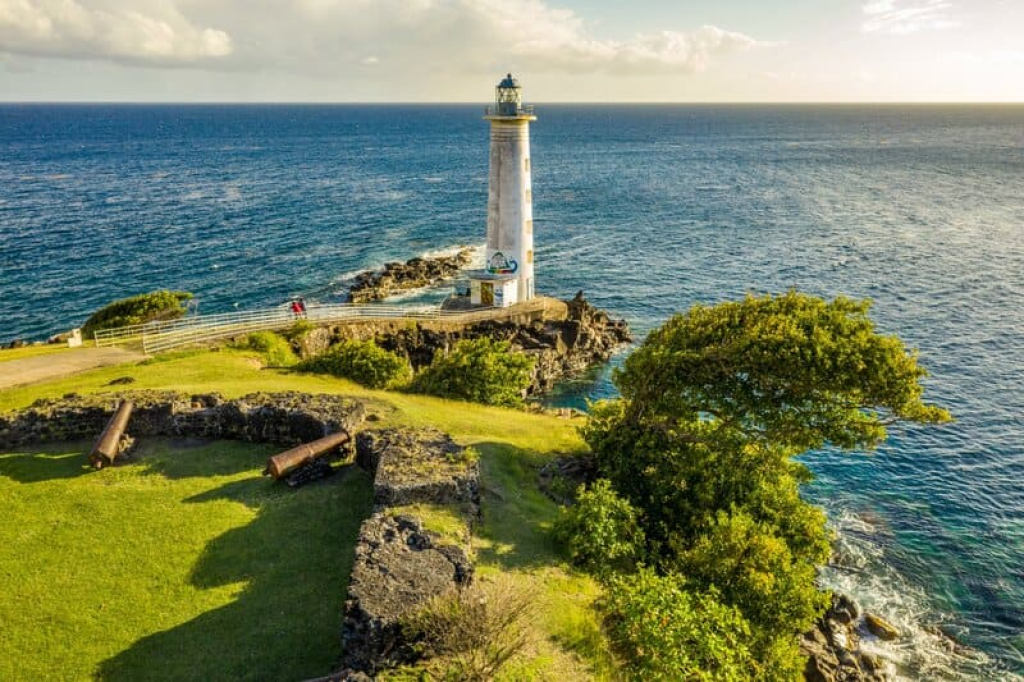
At Vieux-Fort, the ruins of Fort l’Olive sit beside the lighthouse, which dates from 1955. The history goes back to the 1630s, when Charles Liénard de l’Olive settled here and built a palisaded wooden fort, later called Vieux-Fort. What remains today are an old gunpowder store, a battery and cannons facing the sea, with a coastal path that has views of the Caribbean and Les Saintes. A local guide mentions an embroidery workshop in the ruins, and I could not confirm its opening times. The lighthouse site is listed as open every day, without set hours.
Forts You Will Not Find
Some forts in older guides leave no trace, or too little for me to confirm.
Fort de la Madeleine appears on a 17th-century plan in Jean-Baptiste Du Tertre’s history of the Antilles, printed between 1667 and 1671, but I found no visible remains and no reliable record of its end. An earlier version of this page also listed a Fort Saint-Pierre in northern Basse-Terre. I could not find it in any heritage record, so I removed it rather than send you hiking to a site that may not exist.
Before you go
Rent a car. Three of the five forts are on the main islands and none is on a bus route you will enjoy.
Fort Delgrès and Fort l’Olive are on the Basse-Terre side, Fort Fleur d’Épée is five minutes from Pointe-à-Pitre, and the Les Saintes ferry leaves from Trois-Rivières.
Europcar · affiliate link · same price for you
Guided tours
Rather have a local guide do the driving and the explaining? Compare guided tours of Guadeloupe on Tripadvisor.
Grand Cul-de-Sac Marin lagoon trips, mangrove kayaking, full-day island tours, rum distillery visits: local guides list them on Tripadvisor, with traveler reviews and online booking.
Tripadvisor · affiliate link · same price for you
Keep reading
On market mornings you can add Guadeloupe markets to a fort day. For more of the past, see historic sites in Guadeloupe and the museums in Guadeloupe. If you want a day on the water instead, read about kitesurfing in Guadeloupe and surfing in Guadeloupe.
Frequently Asked Questions about the Forts in Guadeloupe
Which fort in Guadeloupe is best?
For the story, Fort Delgrès in Basse-Terre. For the view, Fort Napoléon in Les Saintes. For a free hour near the beaches, Fort Fleur d’Épée in Le Gosier.
Which forts in Guadeloupe are free?
Fort Fleur d’Épée is free, and the grounds of Fort Delgrès are free. Fort Napoléon charges for the museum and garden, about €5 to €7 for an adult depending on the source.
Which fort is open on Monday?
Fort Fleur d’Épée opens at 10 a.m. on Monday and Fort Napoléon is open daily in the morning. Fort Delgrès is closed on Monday.
Are there any cultural or historical events held in Guadeloupe’s forts?
Yes. Some forts, such as Fort Fleur d’Épée, regularly host temporary exhibitions, including art and history displays. Check the local event calendar before your visit, as certain forts occasionally offer guided tours, concerts or heritage days.
Are the forts in Guadeloupe accessible to people with reduced mobility?
Some forts, like Fort Fleur d’Épée, are partially accessible thanks to open areas and nearby parking. Others, such as Fort Napoléon in Les Saintes, are harder to reach because of the steep path, uneven terrain and preserved architecture.
Which forts in Guadeloupe explore the history of slavery and resistance?
Fort Delgrès in Basse-Terre is the key site for understanding Guadeloupe’s fight against slavery. It has a permanent exhibition on Louis Delgrès and the 1802 war, and it is a place of remembrance on May 27.
Can you visit Fort Joséphine?
Yes, by boat or kayak from Terre-de-Haut to Îlet à Cabrit, then a climb on a marked path. It is a ruin, a protected site, and I found no ticket price or opening hours.
Some links on this page are affiliate links. You pay the same price. It's how the site stays free of pop-ups and sponsored rankings.