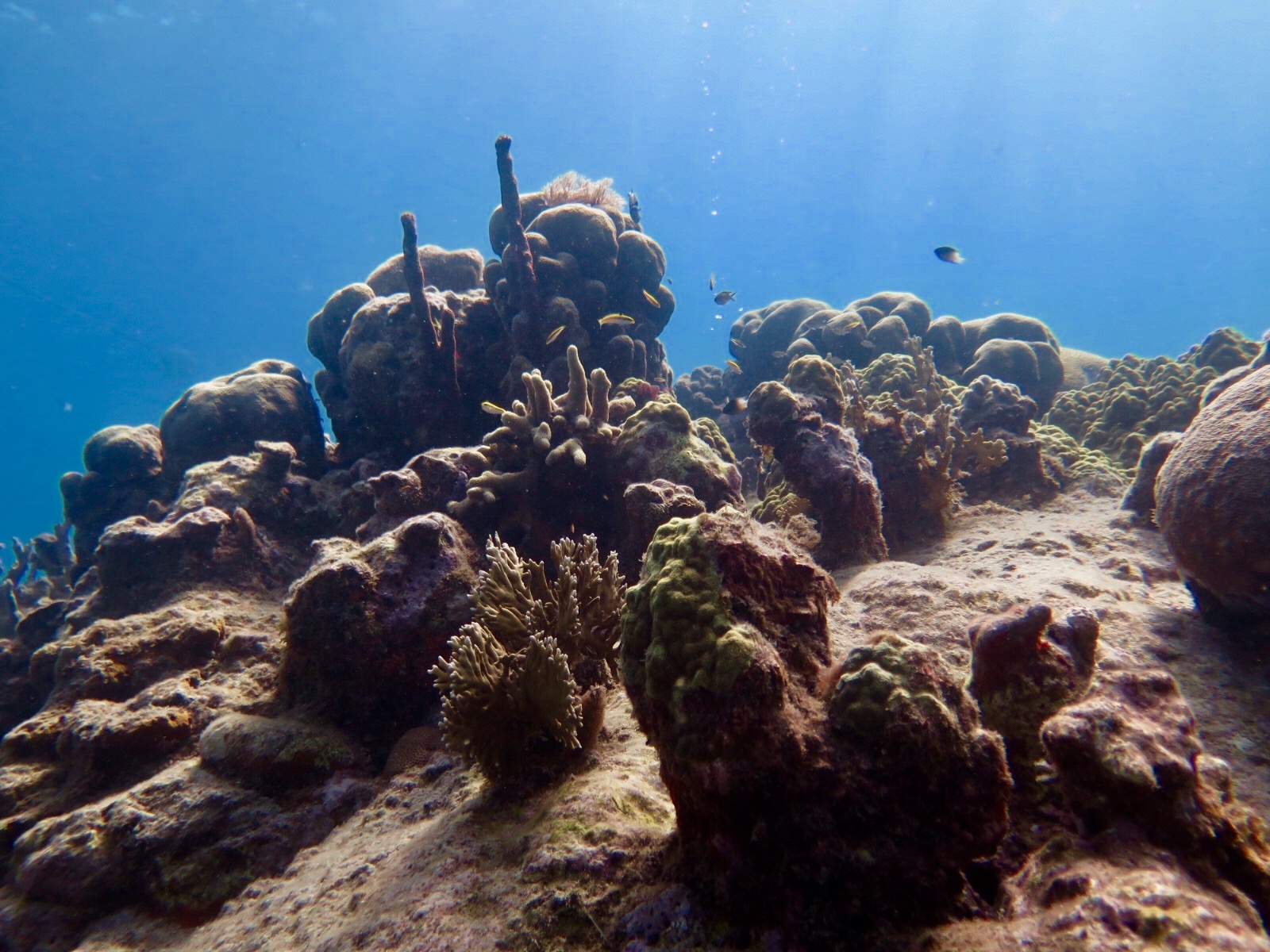
Scuba diving in Guadeloupe starts at about €60: that is the entry price of a first dive in the Cousteau Reserve off Malendure, 6 m deep at most, with an instructor holding on to you the whole time. Certified divers pay from roughly €42 for a guided dive in the same water. The sea sits around 27°C (81°F) in February and 29°C (84°F) in September, so the season never really closes. What changes your dives is the coast you base yourself on, the card in your wallet, and how a French dive center reads it.
Diving is the activity I push hardest when friends ask me what to book, and it is one entry on my list of things to do; back to things to do in Guadeloupe for the rest. Below: where the good sites are, what a try-dive includes, the French rules that surprise American and British divers, and prices I checked in October 2026.
Guadeloupe dive areas at a glance
Most dives on the archipelago happen in five areas. Bouillante on the Caribbean side of Basse-Terre has the most centers and the easiest conditions; the rest reward a ferry ride or a certification.
| Area | Leave from | Level | What you see |
|---|---|---|---|
| Pigeon Islands (Cousteau Reserve) | Malendure, Bouillante | First dive to advanced | Coral, sponges, turtles, wrecks nearby |
| Les Saintes (Sec Pâté) | Terre-de-Haut | Advanced Open Water | Volcanic pinnacles, angelfish, triggerfish |
| Marie-Galante | Island dive center, 10 to 15 min by boat | First dive and up | Coral garden, rays, an old anchor reef |
| La Désirade | Island dive center | Guided dives | Rays, barracuda, three 19th-century anchors |
| Grande-Terre (Port-Louis, Anse-Bertrand, Saint-François) | Port-Louis or Saint-François | First dive and up | Plane wreck at 22 m, arches, seahorses |
The site by site picture, with depths and the dives I would do first, is in best dive sites in Guadeloupe: what to know.
Your first dive: what a try-dive includes
In French it is a baptême de plongée, and it is the easiest way to breathe underwater without a course. You do not need to swim well. You need to be comfortable with your face in the water.
- 📍 Most leave from Malendure beach, Bouillante; others from Saint-François and Port-Louis on Grande-Terre
- 🕒 About 2 hours in total, with 20 or 30 minutes underwater
- 💶 From €62 (20 min) or €72 (30 min) at Les Heures Saines, checked October 2026; other centers list theirs from €60 to €70
- 👶 From age 6 for the 20-minute dive, 12 for the 30-minute one, 6 m deep at most
The price covers the instructor, all the gear and the boat ride to the islets. You get a briefing on the beach, one instructor per diver, and you stay in the shallow coral garden where the light is best. The instructor handles your buoyancy, so your only job is to breathe slowly and equalize your ears.
Two rules catch people out. Centers turn away anyone with heart or lung trouble, asthma triggered by effort, epilepsy, diabetes or ear problems, and pregnant women. And you may not fly for 24 hours after your last dive, so a try-dive on your last morning means a missed flight or a missed dive.
The tip that changes everything
Book the first dive for the morning of day two or three, never your last day. If the sea is rough, the center moves you to another slot, and you still have the 24 hours you need before the flight.
Tripadvisor · affiliate link · same price for you
Flo’s honest take
Go if
You have snorkeled and want to see the reef from inside instead of from above. Twenty minutes at 5 m in the Cousteau Reserve shows you more fish than an hour at the surface.
Skip if
You have a cold or blocked sinuses that day. If you cannot equalize, you will spend the dive at 2 m with a sore ear. Move the slot instead.
Certified divers: French rules to know
Guadeloupe is France, so its dive centers work under the French sport code, not PADI standards. Your card is accepted, but it is translated into a French depth limit, and the dive director on the boat has the last word.
- Bring your card and your logbook. A PADI or SSI card proves your level; the logbook proves you have dived recently. Without it, expect a check-out dive first.
- Open Water means shallow. PADI certifies Open Water divers to 18 m. Sites like Sec Pâté in Les Saintes require Advanced Open Water.
- Prices. Guided dives in the Cousteau Reserve are listed from about €42 to €43, a 2-tank morning in Saint-François from €99, and French FFESSM or ANMP courses from €220 (Manawa listings, October 2026).
- Language. Briefings are in French first. The bigger centers in Bouillante brief in English too, but ask when you book.
Which center suits which diver, from the busy Malendure operators to the one-boat outfits on the small islands, is covered in our guide to dive centers in Guadeloupe.
The Pigeon Islands and the Cousteau Reserve
The two Pigeon Islands sit about 1.5 km off Malendure beach, inside the core zone of the Guadeloupe National Park. Most first dives and most fun dives on the island happen here, because the islets shelter shallow coral on one side and drop away on the other.
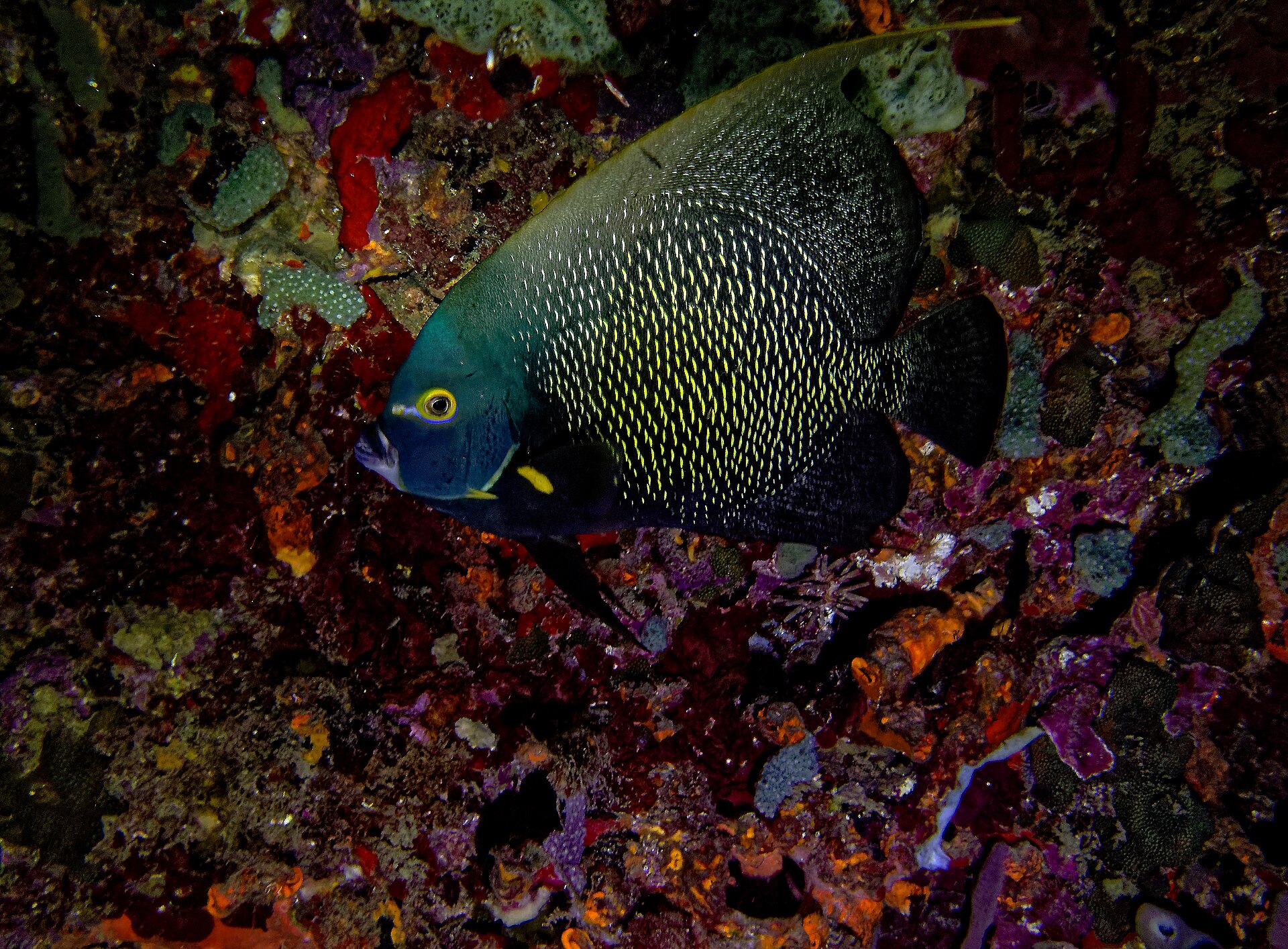
The park’s own guide says the beginner dives stay between 0 and 15 m, while deeper sites around the islets go past 40 m. Look for the bronze bust of Jacques-Yves Cousteau at about 12 m near the coral garden: most guided dives pass by it. Boats may only tie up to the park’s fixed moorings in the core zone, which is why the reef close to the rocks still looks healthy.
The reserve changes completely after dark. Centers at Malendure run night dives for certified divers, when the day fish hide and the night feeders come out; I cover how they work in night diving Malendure.
Wrecks off Bouillante and Port-Louis
Guadeloupe has a handful of wrecks, sunk on purpose or by accident, and two are easy to fit into a trip.
The Franjack lies upright on her keel on sand at about 24 m off Bouillante, with her forward cabin collapsed. It is a short boat ride from the same centers that run the Pigeon Islands, so you can mix a reef dive and a wreck dive in one morning. On Grande-Terre, a plane wreck rests at 22 m off Port-Louis, now covered in coral and fish. Both need certified divers comfortable past 20 m. The full list, with depths and the level each one asks for, is where you can discover wreck diving Guadeloupe.
Beyond Bouillante: the small islands
The outer islands have fewer divers and wilder water. Each needs a ferry, so plan at least a night there if diving is the point.
Les Saintes: Sec Pâté
Sec Pâté is a submerged volcanic peak between Terre-de-Haut and Dominica. Its three pinnacles top out at about 15 m and the base falls away to around 200 m. Expect current and swell, queen angelfish, ocean triggerfish, moray eels and turtles. The tourism board lists it as Advanced Open Water only, and the boat only goes when the sea allows.
Marie-Galante and La Désirade
On Marie-Galante, the Coral Garden is 10 to 15 minutes by boat and suits a first dive, with squirrelfish, moray eels, turtles and rays. Grand Ancre is built around an old anchor now covered in life. La Désirade’s best-known site is a former underwater pipe off Pointe des Colibris, turned into an artificial reef, with three 19th-century anchors nearby and rays, barracuda and triggerfish around it.
When to dive in Guadeloupe
Any month works. The water stays between about 26°C (79°F) in February and 29°C (84°F) in September at Bouillante, so a 3 mm shorty or a 3 mm full suit is plenty.
- December to April: dry season, calmer surface and usually the clearest water, and the busiest boats. Book a few days ahead.
- May to November: warmest water and quieter boats, but heavy rain sends rivers into the bays and clouds the shallow sites for a day or two. Hurricane season peaks from August to October.
If you would rather stay at the surface some days, the same reef is just as good with a mask: see also snorkeling in Guadeloupe for the spots where non-divers in your group can join you.
Flo’s advice
Sleep on the west coast of Basse-Terre for your diving days. Malendure is on the far side of Basse-Terre from the airport and the boats leave in the morning; driving over from a Grande-Terre hotel turns a dive into a full day in the car. After the last dive, Bouillante is the place for the hot springs in Guadeloupe: a warm soak is how I end every dive day there.
Keep reading
Your 24 hours before the flight are a good time to stay on land: the waterfalls in Guadeloupe are a short drive from the dive coast and need no flight clearance at all.
If you like the water with more wind and swell, the Atlantic side is the other half of the island: start with Guadeloupe surf for the breaks and the schools, and also read: kitesurfing Guadeloupe for the lagoon spots on Grande-Terre.
Scuba diving in Guadeloupe: your questions
Do I need a certification to dive in Guadeloupe?
Not for a first dive. A try-dive (baptême) needs no card, only a health declaration and some comfort in the water. For guided fun dives, the deeper reserve sites, the wrecks and Sec Pâté, you need a recognized card such as PADI, SSI or a French level, and ideally your logbook.
How much does scuba diving cost in Guadeloupe?
A first dive costs from about €60 to €72 depending on the center and the time underwater. Guided dives for certified divers start around €42 to €50 per dive, and multi-dive packs bring the price down. Prices above were checked on Manawa listings in October 2026.
Can kids scuba dive in Guadeloupe?
Yes. Les Heures Saines takes children from age 6 for a 20-minute first dive, limited to 6 m, with one instructor per child. The 30-minute version starts at 12.
How long should I wait to fly after diving?
24 hours after your last dive. The Guadeloupe tourism board and the dive centers both give that figure, and it applies to a single try-dive too. Plan your last dive at least a full day before your flight home.
Will I see turtles diving in Guadeloupe?
Very likely around the Pigeon Islands and in Malendure bay, where green turtles feed on the seagrass. Turtles also show up at Sec Pâté and on Marie-Galante. Keep your distance and never touch them: the reserve is a national park core zone.
Before you go
Book your rental car before you land. The dive boats leave in the morning and there is no practical bus to Malendure.
The dive coast, the small-island ferries and the hot springs are all spread out, and airport counters run short in high season. Lock a car in early.
Europcar · affiliate link · same price for you
Some links on this page are affiliate links. You pay the same price. It's how the site stays free of pop-ups and sponsored rankings.