The best snorkeling in Guadeloupe sits on the calm Caribbean side of Basse-Terre, and the most famous reef starts about 1.5 km off Malendure beach in Bouillante: the Pigeon Islands, the heart of what everyone calls the Cousteau Reserve. You can reach it by kayak in about 20 minutes, by glass-bottom boat, or on a dive boat, and the turtles in Malendure bay itself cost nothing but a mask. What changes your day is the coast you pick, the time you get in the water, and if you need a boat at all.
Snorkeling is one piece of my full list of things to do in Guadeloupe, and it is the one I recommend to almost everyone, including people who swim badly. Below are the four places I send friends, what you actually see at each, and the rules of the national park, checked in October 2026.
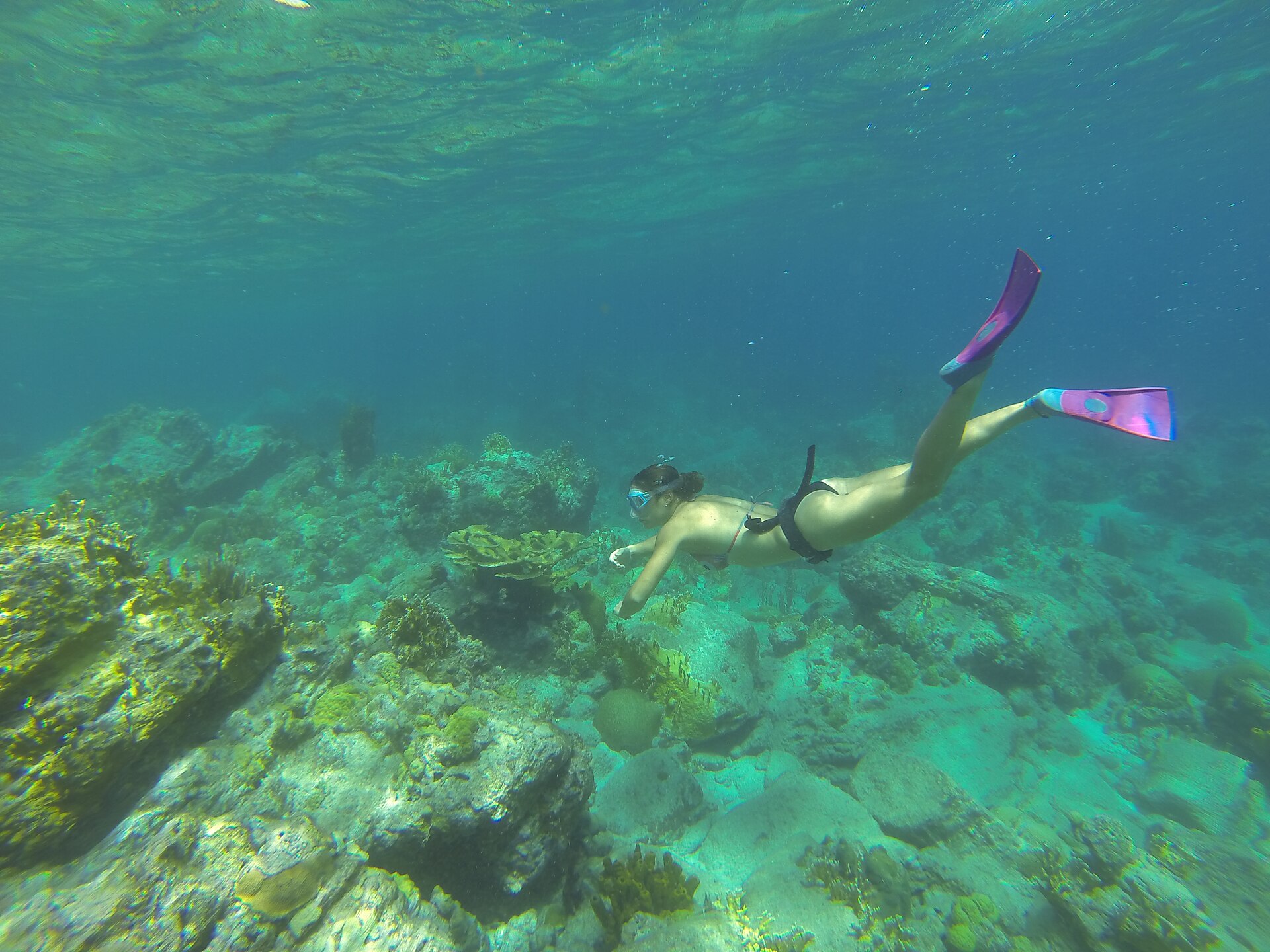
Guadeloupe snorkeling spots at a glance
Four spots cover almost everything worth a mask on the archipelago. Two you can do from the sand, two need a boat. Prices for boat trips are set by each operator, so I only give the official facts here.
| Spot | How you get in | Level | What you see |
|---|---|---|---|
| Pigeon Islands (Cousteau Reserve) | Kayak, glass-bottom boat or dive boat from Malendure | Easy to intermediate | Coral, sponges, parrotfish, barracuda, turtles |
| Malendure bay | From the beach, free | Easy | Green turtles grazing on seagrass |
| Petite Terre | Day trip by boat from Saint-François | Intermediate, some current | Rays, young lemon sharks, turtles |
| Les Saintes (Pain de Sucre) | Ferry to Terre-de-Haut, then from shore | Easy to intermediate | Gorgonians, sponges, reef fish |
Grande-Terre has lagoon beaches where kids can float with a mask, but the reef life there is thin next to Basse-Terre. If you want the shore spots ranked one by one, with parking and shade, see my list of the best snorkeling beaches in Guadeloupe.
1. Pigeon Islands and the Cousteau Reserve
The two Pigeon Islands, Grand Îlet and Petit Îlet, are the reason Guadeloupe shows up on snorkeling lists at all. Since 2009 the water around them has been part of the core zone of the Guadeloupe National Park, the strictest level of protection. The “Cousteau” name comes from Jacques-Yves Cousteau himself, who wrote in 1974 to back the classification of the site, and a bronze bust of him sits on the bottom at 12 m, a dive site rather than a snorkel one.
- 📍 Malendure beach, Bouillante, west coast of Basse-Terre; the islets are about 1.5 km offshore
- 🚣 Kayak about 20 minutes each way, or glass-bottom boat with a swim stop
- 🚗 Paid parking at Malendure, which fills fast in high season
The park names the snorkel and dive zones around the islets, and they are worth knowing when a kayak renter hands you a map. Le Jardin de Corail runs along the east face, the side that looks back at Malendure. La Piscine is the shallow stretch between the two islets. L’Aquarium is the inlet on the north side of Grand Îlet. Boats may only tie up to the park’s fixed moorings in the core zone, so the water close to the rocks stays quiet.
By kayak you paddle across, tie up where the renter tells you, and snorkel in a metre or two of water above the coral. That is the best value on the island and the option I pick. The glass-bottom boats suit families with small kids or anyone who would rather look than swim. My separate pages on Pigeon Island Guadeloupe: what to know and on the Cousteau Reserve go through operators, kayak routes and the dive sites.
Flo’s honest take
Go if
You can be on the water before 10 am, when the light is clean and the dive boats and glass-bottom trips have not stacked up yet.
Skip if
Your only free slot is a weekend afternoon in February. The beach, the car park and the islets are at their busiest, and the water is cloudier after lunch.
2. Malendure beach, for the turtles
You don’t need a boat to swim with a turtle in Guadeloupe. Green turtles graze the seagrass beds in Malendure bay, a short swim from the dark sand, and you can walk in anywhere along the beach. On a calm morning I see one or two in under half an hour.
Look down over the seagrass, not out toward the islets: a turtle on the bottom looks like a brown rock until it lifts its head to breathe. Then stay back. The park’s rule is simple: touch nothing alive, feed nothing, chase nothing. A turtle that has to swim away from you burns energy it needs. Where else they show up, from Deshaies to Les Saintes, is on my page to discover sea turtles in Guadeloupe.
Malendure has snack bars, gear rental stands and the dive centers on the same strip, which makes it the easiest snorkel day on the island. Bouillante also means warm water on land: the village is known for its hot springs, and a soak at one of the hot springs in Guadeloupe after a morning in the sea is the best way I know to end the day.
3. Petite Terre, the wildest water
Petite Terre is two uninhabited islets off the eastern tip of Grande-Terre, classified as a national nature reserve since 1998. Most day trips leave from Saint-François. Only boats with an authorization from the reserve can land passengers, and their number is capped, so this is a booked tour and never a walk-up trip.
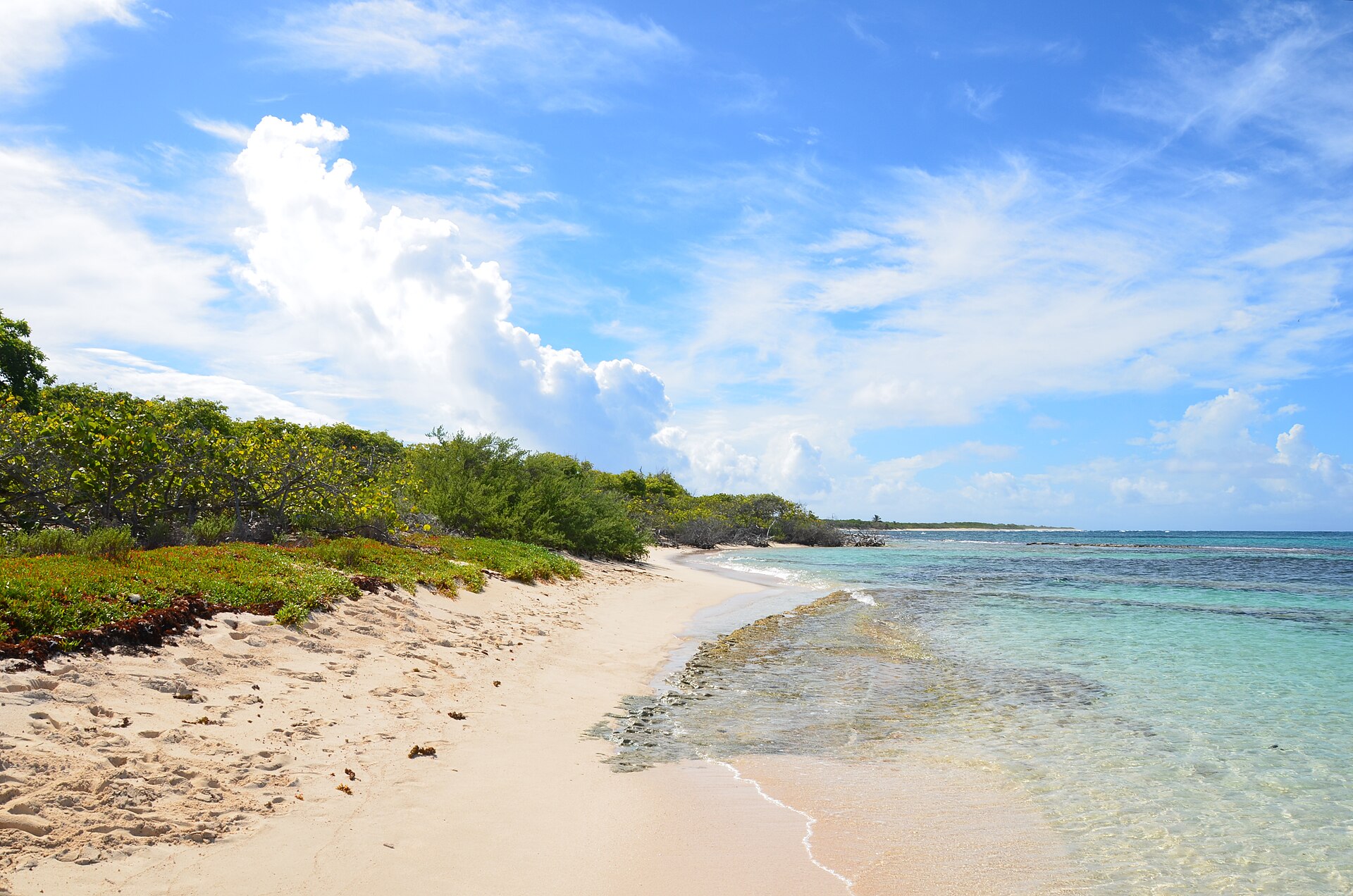
You snorkel in the channel between the two islets, about 150 m wide and around 6 m at its deepest. In the shallows near the beach you often see juvenile lemon sharks, harmless and shy. Further out come spotted eagle rays, southern stingrays, turtles and barracuda. A gentle current runs along the channel, so fins help, and the far end gets choppier.
Two things surprise people. The smaller islet, Terre-de-Haut, is fully protected: you may not walk on it, beach included. And there is no fresh water, no toilet and no shop on either islet, so the tour’s lunch and drinks matter more than the boat.
See boat trips in Guadeloupe on TripadvisorAffiliate link · same price for you
Flo’s honest take
Go if
You want rays and sharks in water you can stand in, and a full day off-grid does not scare you.
Skip if
You get seasick. The crossing is open Atlantic water and on a windy day it is rough both ways.
4. Les Saintes, around Pain de Sucre
If you are already taking the ferry to Terre-de-Haut, pack a mask. The rocky headland of Pain de Sucre, a short walk from the village, drops onto a reef covered in gorgonians and sponges, and you can swim out from the small beach at its foot.
The coves on the island’s sheltered side are good too, with reef fish over rocks and seagrass close to shore. I would not cross to Les Saintes only to snorkel, since Malendure is richer and closer to most hotels. As part of a day or two on the islands, it is the best swim of the trip.
When the water is clearest
The Caribbean coast of Basse-Terre is in the lee of the volcano, which keeps it calmer than the Atlantic side most of the year. Visibility depends less on the month than on the last 48 hours of weather.
- December to April: the dry season, usually the calmest and clearest water, and the busiest weeks.
- May to November: warmer water and fewer people, but heavy rain sends rivers into the bays and clouds the water for a day or two.
- Time of day: mornings. The wind usually picks up after lunch, and boat traffic stirs the sand in the shallows.
- Sargassum: the brown seaweed mostly lands on Atlantic-facing beaches. The Malendure side is rarely hit, which makes it the safe bet when the east coast is covered.
The tip that changes everything
If it poured overnight on Basse-Terre, swap your plan: do the hot springs or a hike that morning and snorkel Malendure the next day, once the rivers have settled.
Gear, sunscreen and park rules
You can rent a mask, snorkel and fins on Malendure beach, and kayak rentals usually include them. Bring your own mask if you wear glasses or care about a good seal: a cheap rental mask that leaks ruins the day faster than bad weather.
The national park’s advice to visitors at the Pigeon Islands is short and worth following to the letter:
- Use a sunscreen with mineral filters only, and put it on well before you get in.
- Touch nothing alive, fixed or moving, and do not stand on the coral.
- Do not feed the fish, and take nothing from the sea, dead or alive.
- Avoid long fins and gloves, and kick gently near the reef.
- Do not buy shells, coral or turtle-shell souvenirs: most species are protected and banned from sale.
Flo’s advice
If someone in your group swims poorly, book a guided snorkel at Malendure instead of a kayak. The guide gets in the water with you and you still see the same coral. If you get hooked and want to go deeper, the same dive centers run try-dives at the islets, and my page on scuba diving in Guadeloupe explains how they work.
Keep reading
A snorkel morning on the west coast pairs well with the rest of Basse-Terre. The waterfalls in Guadeloupe are on the other side of the island, and the trails of the national park start in the same hills; my notes on hiking in Guadeloupe pick the ones that fit a half day.
If you prefer your water with waves, the Atlantic coast of Grande-Terre is where the island surfs, and my Guadeloupe surf page has the breaks and the schools.
Snorkeling in Guadeloupe: your questions
Can I snorkel in Guadeloupe without a boat?
Yes. Malendure beach is free and you can walk in anywhere to find the turtles on the seagrass. The Pigeon Islands are reachable by rental kayak from the same beach, and on Terre-de-Haut in Les Saintes you swim out from shore. Only Petite Terre needs an organized boat trip.
Is snorkeling in Guadeloupe good for kids?
Yes, if you pick the right spot. Malendure has easy entry and turtles close to shore, and the glass-bottom boats to the Pigeon Islands include a swim stop with gear for those who want it. Petite Terre has a gentle current and a long day out, so it suits older kids who swim well.
Are there sharks where you snorkel in Guadeloupe?
At Petite Terre you will likely see young lemon sharks in water under a metre deep near the beach. They are small and keep their distance. At Malendure and the Pigeon Islands sharks are not part of a normal snorkel.
Do I need to book snorkeling in advance?
For Petite Terre, yes: boats are limited by the reserve and fill up in high season. For a kayak or guided snorkel at Malendure, booking a day or two ahead is wise from Christmas to Easter; the rest of the year you can usually turn up in the morning.
What is the best month for snorkeling in Guadeloupe?
The dry season, December to April, gives the most reliable calm and clear water on the west coast. Outside it, the sea is warmer and quieter, and a clear morning after a dry spell can be just as good.
Before you go
Book your rental car before you land. The best snorkel spots are spread over two islands and the morning is when you want to be there.
Malendure is on the far side of Basse-Terre and the boats to Petite Terre leave early from Saint-François. Airport counters run short in high season, so lock a car in early.
Europcar · affiliate link · same price for you
Some links on this page are affiliate links. You pay the same price. It's how the site stays free of pop-ups and sponsored rankings.